In This Episode
Collision repair is getting cornered into a bad choice: fight every line item and lose time, eat the gap and lose money, or compromise the repair and inherit the liability. Owners already know the pressure points. The part gets downgraded. The procedure gets labeled “not necessary.” The scan or reprogramming gets denied. And the customer, most of the time, can’t float thousands out of pocket while they hope for reimbursement.
This episode isn’t a rant about insurers. It’s a practical look at the next lever: state legislation.
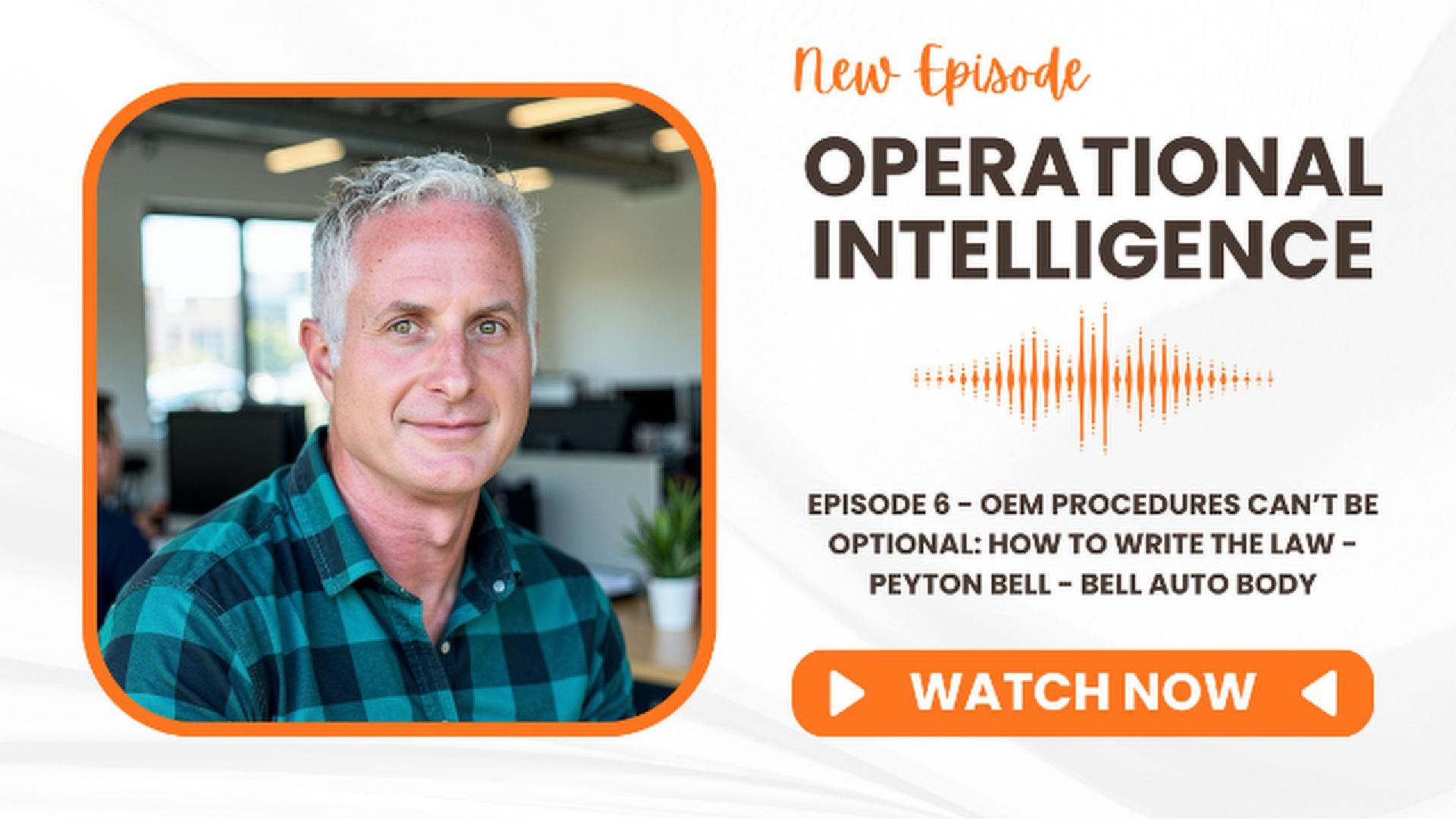
Tom sits down with Peyton Bell, a 25-year-old owner of Bell Auto Body in Broken Arrow, Oklahoma, who’s building a playbook to change the rules instead of renegotiating the same fight on every claim. Peyton’s core position is simple and hard to argue with: if the OEM says it’s required for a safe repair, an insurer shouldn’t be able to deny payment for it. Not because it helps shops make more money, but because it protects the customer in the next crash and reduces the industry’s exposure to preventable failures.
What this episode is really about
It’s about turning the conversation from “please pay this line” into “here’s the standard, and you don’t get to opt out of it.”
The operator playbook Peyton lays out
-
Stop pitching this as a shop issue. Pitch safety.
Lawmakers don’t care about your labor rate. They do care about unsafe cars on the road, family safety, and preventable injury. -
Simplify your message until a non-car person can repeat it.
Peyton’s approach is to practice the pitch like a sales call: short, clear, and light on technical jargon. -
Identify your state senator and get on their calendar.
You don’t need a special introduction. You’re a constituent. Start with an email or call, ask for a short phone conversation, then show up when they host public events. -
Use proof points that land quickly.
Instead of drowning people in procedures, focus on outcomes: what happens when repairs aren’t done to OEM standards, and why payment denial is effectively steering the repair. -
Build a coalition, not a lone-wolf crusade.
A shop owner can start the spark, but getting traction requires the group: association events, a room full of owners, and consistent pressure. -
Aim the bill at denial behavior, not shop operations.
The point isn’t to tell shops how to run. It’s to restrict an insurer’s ability to deny payment when the request is tied to OEM-required safe repair steps. -
Accept the timeline and start anyway.
Peyton is blunt: this is a years-long process. But five years from now, the environment won’t be easier if nothing changes.
If you’re an owner, GM, or estimator who’s tired of seeing safe repairs treated like optional line items, this episode gives you a roadmap to start the process in your own state, and a clearer way to explain what’s at stake without turning it into an industry argument.
Listen to the episode and pull out the one thing that matters most: a simple, repeatable message you can take to your association and your lawmakers. Listen on spotify here.