OUR VALUES
How Orlando Auto Body Tracks Closing Ratios to Stop Revenue Leaks
(And Why “I Think We’re Around 80%” Is Costing Shops More Than They Realize)
Episode 3 – Operational Intelligence
Most collision shops can tell you their car count in seconds.
Ask about their closing ratio, and the answers get fuzzy—guesses, optimism, and gut feel.
That’s a problem, because the closing ratio isn’t a “sales stat.” It’s an operational control metric. When you don’t track it with discipline, you lose visibility into what’s actually happening between the first call and a signed repair order—and that’s where profitable jobs quietly slip away.
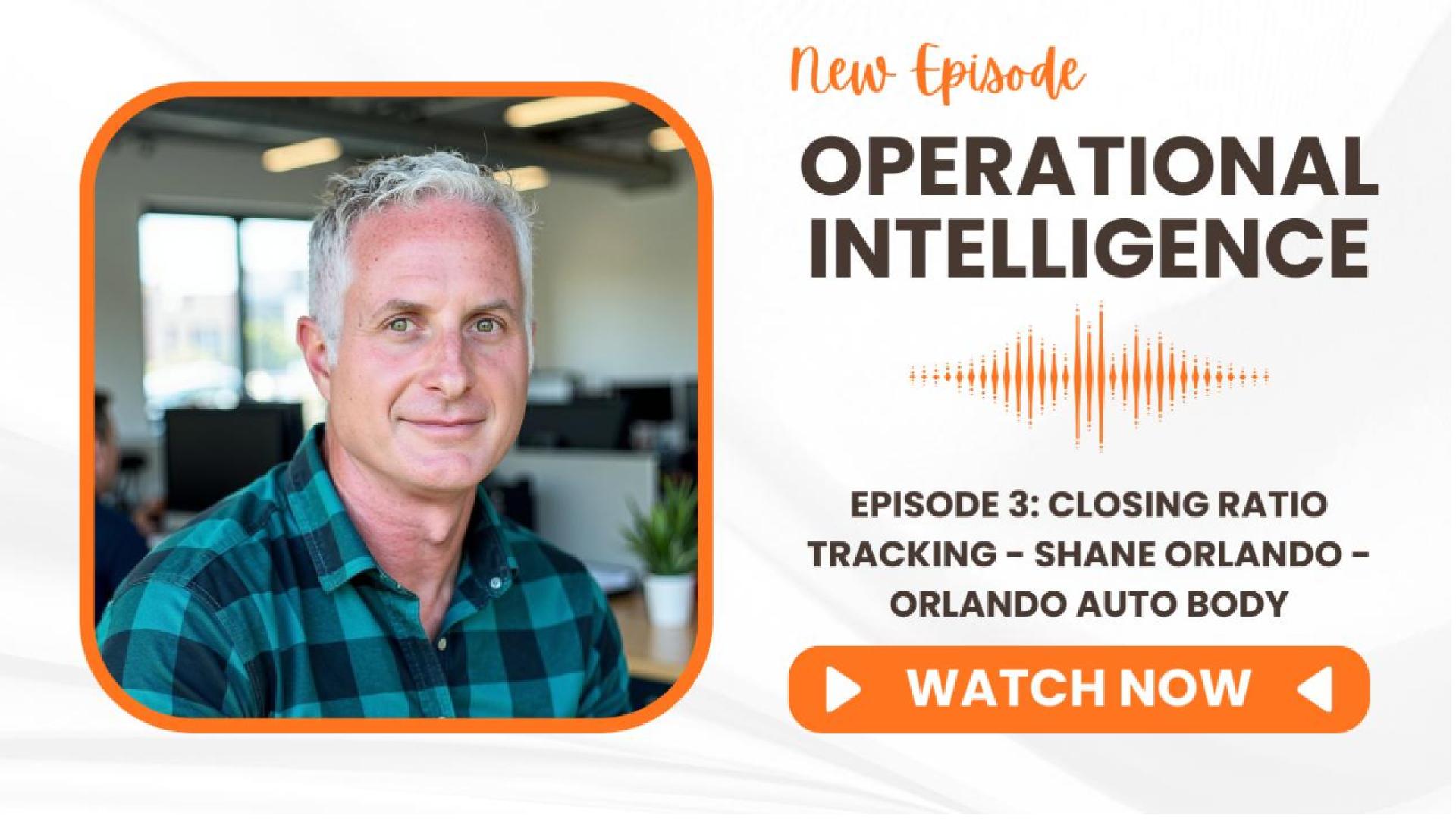
In Episode 3 of the Operational Intelligence Podcast, I sit down with Shane Orlando of Orlando Auto Body to break down how he tracks closing ratios in a practical, repeatable way—and how that system drives better forecasting, steadier production, and more predictable revenue.
Closing Ratio Is Not a Guessing Game
Shane walks through the mindset shift most shops need to make:
Closing ratio isn’t about being “good at sales.”
It’s about eliminating blind spots in your front office process.
When you track every lead, every appointment, every estimate, and every follow-up, you can finally answer questions like:
-
Are we losing jobs because of price… or because we didn’t follow up?
-
Are we overloaded… or are we just not converting what we already have?
-
Do we have a marketing problem… or a process problem?
The System Shane Uses to Track It
This episode gets tactical. Shane explains how Orlando Auto Body keeps the pipeline organized from start to finish—so nothing falls through the cracks:
-
How leads are logged and categorized
-
What gets tracked from call → appointment → estimate → sold job
-
Where most shops lose the close (and don’t realize it)
-
The follow-up discipline that turns “maybe” into scheduled work
-
How tracking helps the shop plan capacity instead of reacting to surprises
Why This Matters More Than Ever
If you’re trying to control cycle time, stabilize car count, and improve profitability, you can’t afford to run your sales pipeline on assumptions.
Shane makes a clear point in this conversation:
When the shop knows its real closing ratio, decisions get easier.
You can forecast production with more confidence.
You can identify training needs in the front office.
You can stop blaming “slow seasons” when the real issue is conversion leakage.
And you can build a process that scales.
If You Want More Sold Jobs, Start Here
This episode is for owners and operators who want fewer surprises and more control over results—without adding complexity or chasing vanity metrics.
Listen to Episode 3 of Operational Intelligence:
Closing Ratio Tracking – Shane Orlando – Orlando Auto Body