
Industry News
What Insurers Are Cutting From Your Paint Estimate – and How to Get Them to Pay
We looked at 554 short pays. On the 290 we compared line by line, insurers cut paint on 78% of them.
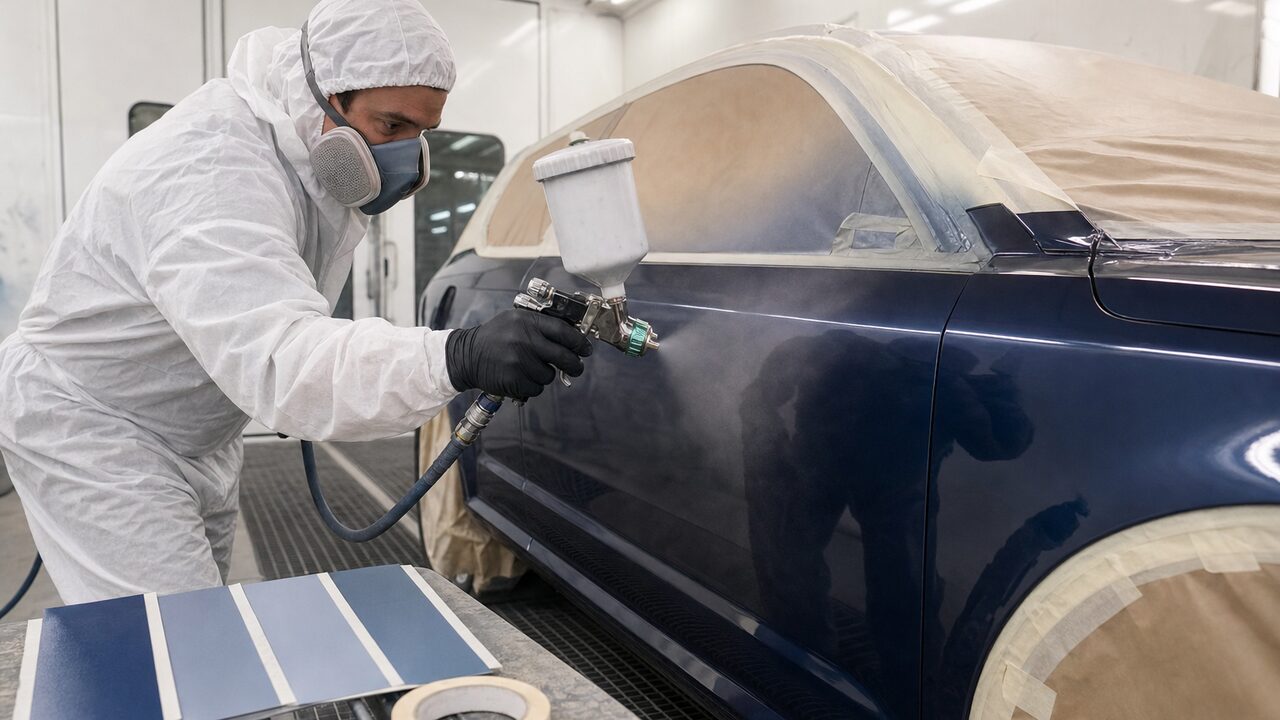
Insurance denials and short pays have become part of the daily workflow for collision shops. The question isn’t just whether an insurer will cut an estimate, it’s what gets cut – and how you can make sure you get paid.
One place worth watching closely is paint and refinish.
We looked at 554 short pays from collision shops using Reclaimr from November 2025 through September 2026. On the 290 that Reclaimr compared line by line, 226 – 78%, more than 3 out of 4 – had at least one paint or refinish item the insurer cut.
Paint-related items accounted for $120,000 of the $698,000 in disputed charges.
But it’s not always the entire process that goes missing. It’s the steps that get you there.
Clear coat, blend and three-stage almost always made it onto the insurer’s estimate. What got pulled was often the hands-on steps that estimating guides don’t build into standard paint time.
When the shop wrote the step, here’s how often the insurer’s estimate left it out:
- Raw plastic prep: 55%
- Spray-out panel: 54%
- Feather, prime and block: 42%
- Denib, sand and polish: 39%
- Color tint: 36%
These aren’t theoretical procedures, they’re work someone in the shop actually has to perform.
But the impact doesn’t stop with labor. Most of these short pays also carried fewer refinish hours than the shop wrote.
Because paint and materials are commonly billed by the refinish hour, cutting labor hours can cut materials at the same time. At a typical materials rate of $45 an hour, the typical cut of 3.1 hours means another $140 disappears from the repair.
Across hundreds of repairs, small cuts can become significant lost revenue.
There is some good news in the data. When a shop fought back, the change stuck: the missing item was back on the insurer’s next estimate 51% of the time.
Here are three things you can do to give a disputed operation its best shot:
- Write each step on its own line so it can’t hide inside panel time.
- Point to the estimating guide showing that the step isn’t included.
- Keep the proof: spray-out cards, photos and paint manufacturer’s technical documentation.
Want to get paid more for your work? Figure out where the money is leaking – and look closely at paint.
Want to learn more? Find more tips for getting paid for your paint work here.